
Meet Ravindra Kaushik: R&AW's 'Black Tiger' who joined Pakistan Army as Major and spent 8 years as undercover spy
Zee News· 615 words · 4 min read
More images
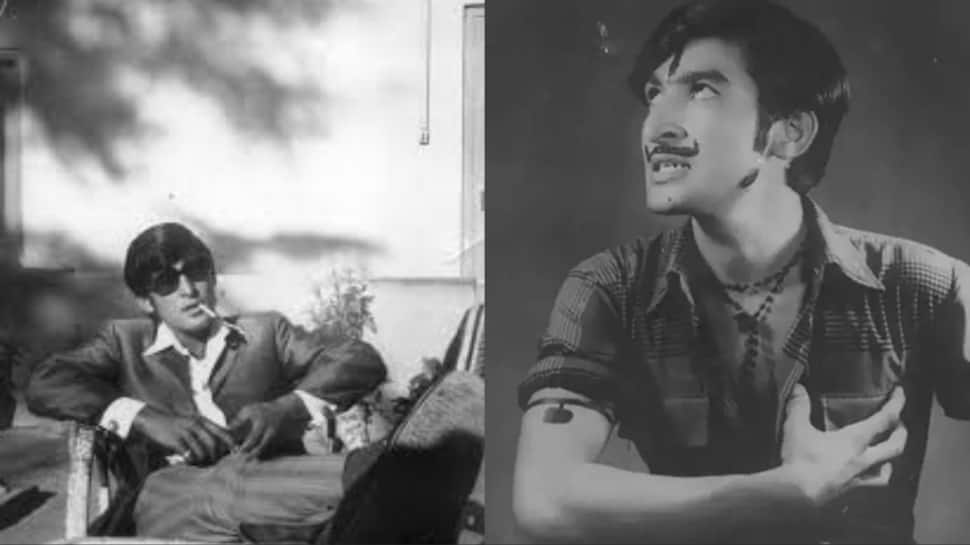
Before Bollywood turned espionage into spectacle, a young man from Rajasthan was already living it, not on a film set, but inside the Pakistan Army.
Ravindra Kaushik spent nearly a decade as one of India's most valuable spies, embedded so deeply in Pakistani society that he rose to the rank of Major, married a Pakistani woman, and fathered a child, all while quietly passing critical intelligence back to New Delhi. He was known within R&AW as the Black Tiger. Prime Minister Indira Gandhi herself is said to have given him the title.
His story did not end in triumph. It ended in a prison cell in Mianwali, where he died in 2001, largely forgotten by the country he had served.
A stage, a soldier, and a recruiter in crowd
Kaushik was born on 11 April 1952 in Sri Ganganagar, a town in Rajasthan that sits close enough to the Pakistan border that its residents grow up hearing Punjabi and absorbing the rhythms of life on both sides. He was, by all accounts, a gifted performer. While studying Commerce at SD Bihani College, he threw himself into theatre and discovered a talent for inhabiting other people's lives.
In 1973, that talent took him to a national drama competition in Lucknow. His act was a solo performance, an Indian soldier under interrogation. He played it with such conviction that someone in the audience decided he could do the real thing.
That someone was from R&AW.
Training for a life that wasn't his
What followed was an intensive programme in Delhi designed to strip away one identity and build another from the ground up. Kaushik studied Islam, mastered the particular cadences of Pakistani Urdu that distinguish it from the Indian variety, and memorised the geography of a country he was preparing to infiltrate.
In 1975, at the age of 23, he crossed into Pakistan as Nabi Ahmed Shakir, a name he would carry for the rest of his active life. He enrolled at Karachi University, earned a law degree, and then did something that went far beyond the original brief: he joined the Pakistan Army. By the time he was done, he held the rank of Major.
Eight years inside the enemy's uniform
Between 1979 and 1983, Kaushik fed a steady stream of intelligence back to India. He reported on troop movements in Punjab. He gathered details on Pakistan's nuclear facility at Kahuta. He did all of this while living as a Pakistani, building a life complete with a wife named Amanat and a child.
Then, in 1983, R&AW made a mistake.
A junior operative named Inayat Masih was dispatched to make contact with Kaushik at a park in Multan. Masih was intercepted by the ISI almost immediately. Under interrogation, he gave up enough information to lead Pakistani intelligence to the meeting point and to the man waiting there. Kaushik was arrested in September 1983.
The price of a decade's deception
He was moved through interrogation centres in Sialkot before being transferred to high-security prisons in Kot Lakhpat and Mianwali. In 1985, a Pakistani military court sentenced him to death. The sentence was later commuted to life imprisonment.
He spent the remaining years of his life behind bars, largely cut off from India and, by most accounts, largely abandoned by the agency he had served. Ravindra Kaushik died on 21 November 2001 in Mianwali Central Jail from pulmonary tuberculosis complicated by heart disease. He was 49.
He is widely regarded as the real figure behind Dhurandhar, Bollywood's fictional tribute to India's undercover operatives. The films came decades after the man. None of them quite captured what it costs to live as someone else and die as no one.